
- PV-Station-Solutions
- PV-Panel-Testing-Solutions
- Silicon-Ingot-Testing-Solutions
In today's rapidly developing photovoltaic industry, product quality and reliability are the core of competition. EL inspection (electroluminescence inspection), as a non-destructive testing technology, with its high precision and full-process coverage, has become the "quality gatekeeper" throughout the PV industry chain. From silicon wafer production to power station operation and maintenance, EL inspection products play an irreplaceable role in improving yield and reducing failure rates.
Technical Principles
EL inspection works by applying a forward bias to PV modules, exciting carrier recombination inside the cells to emit light. A near-infrared camera captures the images, intuitively reflecting current density distribution and defect locations. Its core advantages include:
Non-destructive: Detects cracks, broken grids, etc. without disassembling the module.
High sensitivity: Can identify micron-level defects (e.g., 0.1mm cracks).
Full-process applicability: Covers the entire lifecycle from silicon wafers, cells, modules to power station O&M.
Standardized Application
Industry standards (such as IEC TS 60904-13, T/CPIA 0020-2020) specify current injection conditions and image analysis rules for EL testing, ensuring comparability and reliability of results.
Manufacturing: Process Optimization and Yield Improvement
Wafer stage: Detects minority carrier lifetime and dislocation defects, screening high-quality materials.
Cell stage: Identifies cracks, poor soldering, uneven diffusion, etc., optimizing production processes.
Module stage: Full inspection before and after lamination, preventing defects like fragments, edge over-etching from entering the market.
Power Station Construction: Quality Acceptance and Risk Prevention
Arrival acceptance: Spot-checks modules for crack and hot spot risks, preventing inferior modules from being grid-connected.
Installation monitoring: Identifies cracks caused during construction, reducing early failure rates.
O&M: Fault Diagnosis and Lifespan Extension
Hot spot localization: Uses brightness differences in EL images to identify current blocking areas, accurately replacing faulty modules.
Aging assessment: Long-term monitoring of module brightness attenuation, predicting remaining lifespan.
A TOPCon module factory: After introducing EL inspection, crack detection rate increased to 99.5%, saving over 2 million RMB annually in rework costs.
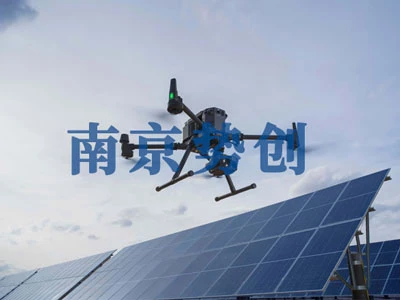
A desert PV power station: EL inspection combined with drone inspection covered 50MW modules per day, improving fault location efficiency by 20 times.
EL inspection technology, through full-chain quality control, provides technical support for the efficient and sustainable development of the PV industry. With the integration of AI and drone technology, its application scenarios will further expand, becoming a core driver for the PV industry's march towards intelligence.
contact
Be the first to know about our new product launches, latest blog posts and more. Nanjing Vision Potential Intelligent Technology Co.,Ltd.Established based on the Nanjing Xiangning Artificial Intelligence Research Institute, we have brought together a number of outstanding industry... Any question or request?
Click below, we’ll be happy to assist. contact