
- PV-Station-Solutions
- PV-Panel-Testing-Solutions
- Silicon-Ingot-Testing-Solutions
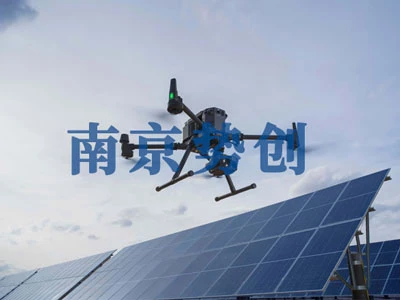
As PV plants scale up, traditional manual inspection suffers from low efficiency and high cost. Drone inspection, with its efficiency and flexibility, is becoming a new trend, but its technological maturity faces multiple challenges. This article delves into the core difficulties and solutions for drone inspection in PV plants.
Complex Environmental Interference
Strong reflection and glare: PV panel surface reflectivity difference >60% leads to overexposure or noise, increasing false detection by 35%.
Dynamic occlusion: Flight jitter causes target displacement error ≥15 pixels, affecting defect positioning accuracy.
Algorithm Performance Bottlenecks
Small defect recognition: Cracks/hot spots average size<5×5 pixels; traditional YOLO models on edge devices achieve FPS <8, failing to meet real-time requirements.
Multispectral fusion: Infrared and visible data alignment is difficult, and hot spot and crack spectral features are easily confused.
Hardware and Endurance Limitations
Wind resistance: In plateau areas with instantaneous wind >15m/s, drone hovering stability decreases, increasing image blur by 40%.
Battery life: Large plant inspections require frequent battery changes, limiting coverage per flight.
Multimodal Dynamic Fusion Algorithms
Environmental perception layer: Polarization anti-reflection technology reduces glare, improving imaging in low light.
Dynamic decision layer: A confidence-level warning mechanism initiates secondary timing verification for low-confidence defects.
Hardware Optimization Directions
High-precision gimbal: Six-axis stabilization system controls hovering accuracy within ±0.1m.
Long-endurance design: Hydrogen fuel cell modules extend flight time to 90 minutes, covering 10MW plants in a single mission.
Standardization Construction
Route planning: GIS-based automatic generation of optimal inspection paths reduces blind spots and repeated flights.
Data specifications: Unified defect classification standards (e.g., hot spot grading, crack length thresholds) enhance report comparability.
AI + Edge Computing: End-side inference models will compress latency to within 20ms, enabling real-time defect marking.
Digital Twin Applications: Construct 3D plant models, overlay EL and infrared data for predictive maintenance.
Although drone inspection technology faces challenges like environmental interference and algorithm bottlenecks, through innovation and standardization, it is expected to become the "air doctor" for PV O&M, driving the industry towards intelligence and efficiency.
contact
Be the first to know about our new product launches, latest blog posts and more. Nanjing Vision Potential Intelligent Technology Co.,Ltd.Established based on the Nanjing Xiangning Artificial Intelligence Research Institute, we have brought together a number of outstanding industry... Any question or request?
Click below, we’ll be happy to assist. contact