
- PV-Station-Solutions
- PV-Panel-Testing-Solutions
- Silicon-Ingot-Testing-Solutions
Driven by the "dual carbon" goals, solar photovoltaic power plants, as core carriers of clean energy, are reshaping the global energy landscape at a rapid pace and have become a vital force in advancing the energy transition. According to the "Global PV Market Report 2025" released by the International Energy Agency (IEA), global newly installed PV capacity reached 290GW in 2024, a year-on-year increase of 35%. China contributed 175GW of new installations, accounting for 60.3% of the global total, continuing to lead the development of the global PV industry. The stable operation, power generation efficiency, and lifespan of PV plants are not only crucial for the reliability of energy supply but also directly impact investment returns and the realization of environmental value—for a 100MW centralized PV plant, every 1% increase in power generation efficiency can add approximately 1.2 million kWh of electricity annually and reduce carbon emissions by about 960 tons, equivalent to planting 53,000 trees. Inspection, as the core of PV plant operation and maintenance management, acts as the "lifeline" safeguarding this "green energy factory." Through comprehensive, regular, and refined inspections, hidden dangers are promptly eliminated, and conditions are optimized, allowing every ray of sunlight to be efficiently converted into clean electricity, ensuring the long-term safe and efficient operation of PV plants.
The operating environment of PV plants is complex and variable. Outdoor centralized plants face natural erosion from wind, sand, heavy rain, lightning, and high temperatures, while distributed plants encounter issues like building shading and roof aging, all of which can damage equipment. Meanwhile, core equipment such as modules, inverters, and mounting structures inevitably undergo aging, wear, and faults during long-term operation. If not detected and addressed promptly, small issues can escalate into major failures or even safety accidents. According to data from the China Photovoltaic Industry Association (CPIA), over 80% of major failures in PV plants originate from undetected early-stage hazards. Among these, failures caused by module hot spots and bracket corrosion account for 42%, and inverter failures account for 28%. A northern centralized PV plant once neglected module snow shading due to untimely inspections, leading to local module hot spots and burnout, resulting in a direct loss of over 800,000 RMB and affecting normal power generation for 15 days.
Practice has proven that the absence of inspections is like planting time bombs in the energy artery. Standardized regular inspections achieve the core goal of "prevention before the event," with value mainly体现在 three aspects:
Reduce equipment failure rates and minimize safety risks. Industry data shows that PV plants implementing standardized regular inspections can reduce equipment failure rates by over 58% and lower safety risks such as fires and electric leaks by 82%. Inverter failure rates in centralized plants can be controlled within 3%, and response times for module fault handling in distributed plants are shortened to within 4 hours.
Maintain power generation efficiency and reduce energy loss. Minor issues like module shading or loose connections, if left unaddressed, can cause power generation losses of 10%-30%. Regular inspections promptly clear shading and repair anomalies, ensuring the plant's Performance Ratio (PR) remains stable within a reasonable range of 82%-88% (industry excellence can reach over 90%). For a 50MW centralized PV plant, every 1% stable increase in PR can generate an additional 600,000 kWh annually, increasing revenue by approximately 240,000 RMB.
Extend equipment lifespan and maximize investment value. PV modules are designed for 25-30 years of service life, but without standardized inspection and maintenance, actual lifespan may shorten to 15-20 years. Through regular inspections and scientific maintenance, modules can achieve their designed lifespan of over 25 years, and the lifespan of core equipment like mounts and inverters can be extended by 3-5 years, significantly reducing replacement costs and enhancing the long-term return on investment. Typically, the investment in standardized inspections can increase the plant's full lifecycle revenue by 12%-18%. Additionally, inspections ensure the safety of O&M personnel and equipment property, complying with industry compliance requirements such as the "PV Power Station Operation and Maintenance Management Specification" (GB/T 30953-2014).
PV plant inspection is not a simple "quick glance" but a systematic process akin to "looking, listening, questioning, and feeling." It covers all scenarios including modules, mounts, inverters, cables, and auxiliary facilities, combining visual checks with professional testing to ensure no blind spots are missed and every abnormal signal is accurately captured. Inspection frequencies vary for different plant types: Centralized PV plants conduct daily routine inspections once a day, comprehensive inspections once a month, quarterly专项 inspections every 3 months, and annual comprehensive inspections once a year. Distributed PV plants (industrial/commercial rooftop, residential) perform routine inspections every 3 days, comprehensive inspections once a month, and increase frequency during special periods like rainy or typhoon seasons.
PV modules are the core of energy conversion, and their condition directly determines power generation efficiency, accounting for 45%-55% of total plant investment. Inspections focus on both "appearance and performance" dimensions to ensure modules function properly in energy conversion.
In terms of appearance, check module glass for breakage, scratches, or micro-cracks (unaddressed micro-cracks accelerate power degradation by an additional 1%-2% annually). Inspect frames and backsheets for corrosion or deformation (corrosion area exceeding 5cm² requires immediate treatment). Check junction boxes for looseness, bulging, water ingress, or poor sealing (water ingress can cause short circuits, increasing failure rates by 15%). Examine the surface for dust, bird droppings, weeds, or other shading objects—these seemingly minor shades can cause module power to plummet by 25% and even induce hot spot effects (hot spots raise local temperatures, accelerate aging, and can directly burn modules). Statistics show that surface shading causes an average annual power generation loss of 8%-12% in outdoor centralized PV plants and 15%-20% in distributed (rooftop) plants due to fallen leaves and bird droppings.
In terms of performance, use an infrared thermal imager on clear days with irradiance >500W/m². If a module's local temperature is more than 20°C higher than its surroundings, it indicates a hot spot requiring immediate attention to prevent accelerated aging or burnout. Simultaneously, use EL testers to detect "internal injuries" like cell cracks or broken grids (cracked modules exceeding 5% of a string affect its generation efficiency). Combine with IV curve testing to track module performance degradation, ensuring first-year degradation ≤2% and subsequent annual degradation ≤0.7% per industry standards (GB/T 29364-2012). Modules exceeding this must be replaced.
Additionally, module cleaning is an essential supporting task for inspections, directly impacting generation efficiency: areas with heavy pollution, sandstorms, or bird droppings (e.g., centralized plants in Northwest China) recommend cleaning every 1-3 months; during rainy seasons, intervals can extend to 3-6 months; clean within 24 hours after haze or snowfall. Avoid cleaning during high module temperatures (>45°C) or intense sunlight. Use neutral cleaners (pH 7-9), and avoid hard brushes or high-pressure water jets (pressure >0.3MPa) directed at junction boxes. Ensure insulation protection and never step on modules (modules withstand ≤2400Pa pressure; stepping easily causes micro-cracks). Data shows module cleaning can increase power generation by 5%-15%, with up to 15%-20% improvement in sandy northwestern regions.
Mounts and foundations are the "load-bearing skeleton" for modules, accounting for 10%-15% of total plant investment. They directly relate to structural safety, especially in harsh outdoor environments (typhoon, heavy rain, snow areas). Inspections must focus on hazards to avoid collapses and module falls.
During inspections, check mounts for corrosion, deformation, or loose bolts (bolt looseness rate >3% requires comprehensive tightening). Examine foundations for settlement or cracks (settlement >5mm needs immediate reinforcement). Verify the integrity of wind, snow, and lightning protection measures. For special plants like fishery-PV or agriculture-PV hybrids, also check mount anti-corrosion treatment (anti-corrosion coating thickness ≥80μm; if worn >30%, re-spray). Insufficient anti-corrosion in fishery-PV mounts, constantly exposed to moisture, can lead to corrosion rates of 0.1mm/year, requiring replacement within 3-5 years and drastically increasing O&M costs.
Simultaneously, use strain sensors to monitor wind-induced stress on mounts in real time, and adjust mount angles accordingly (optimal tilt for centralized plants is typically local latitude ±2°, boosting generation by 3%-5%). This can extend mount life by 3-5 years and significantly reduce O&M costs. Industry data indicates standardized inspection and maintenance can keep mount failure rates below 1% and reduce major accidents like foundation settlement or mount collapse to below 0.1%.
Inverters, the "heart" of a PV plant, convert DC power from modules to AC power, accounting for 15%-20% of total investment. Combiner boxes collect and distribute current, acting as the critical link between modules and inverters. Their stable operation is key to grid-connected generation, directly affecting plant efficiency and grid stability.
Inspections combine "smelling, listening, seeing, and measuring": First, "smell" for burnt odors around inverters/combiner boxes (often indicating internal wiring aging/short circuits). Then, "listen" for sharp noises, vibrations, or irregular fan operation (fan failure impairs cooling, increasing failure rates by 40%). Check operation indicators and display screens, record DC/AC side voltage, current, and power parameters, comparing with historical data to identify anomalies (voltage fluctuation >±5%, current fluctuation >±10% require immediate investigation). Identify common inverter faults like overvoltage, islanding protection, and leakage current (overvoltage protection triggering accounts for 35%, leakage current anomalies 25% of inverter faults).
Additionally, regularly inspect inverter/combiner box cooling systems (heatsink cleanliness, fan speed) to ensure operating temperatures stay within -25°C to 60°C (above 60°C, inverter efficiency drops 5%-10%). Check terminals for looseness or overheating (terminal temperature >70°C needs tightening) to prevent poor contact and wiring burnout. Statistics show standardized inspections can keep inverter failure rates below 3%, combiner box failure rates below 2%, and fault response times within 2-4 hours, minimizing generation losses.
As PV plant scales expand (the world's largest single centralized PV plant has exceeded 10GW), traditional manual inspection models struggle to meet refined and efficient O&M demands—manual inspections are inefficient (one person inspects only 5-8MW modules per day), prone to human error and adverse weather, with missed detection rate reaching 15%-20%. Outdoor inspections also involve high labor intensity and safety risks, especially in remote areas or high-altitude rooftops.
Against this backdrop, intelligent inspections have become a trend, leveraging drone inspections, robotic inspections, and IoT monitoring to achieve "quality improvement, efficiency enhancement, cost reduction, and safety." Data shows intelligent inspections compared to manual methods boost efficiency by 5-8 times, reduce missed detection rate below 3%, cut O&M costs by 20%-30%, and eliminate over 80% of outdoor manual work, significantly lowering safety risks for personnel.
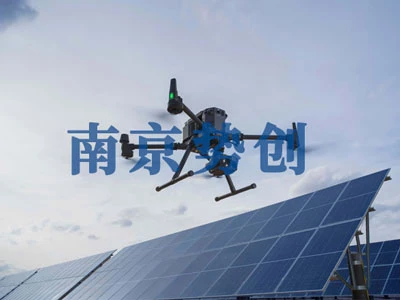
Drone inspections, primarily used for centralized PV plants, carry high-definition cameras and infrared thermal imagers, rapidly covering large module areas at 30-50MW per hour, accurately identifying cracks, hot spots, and shading issues, particularly suitable for plants in remote mountainous or desert regions. Robotic inspections, often used for distributed plants (rooftops, factories), move along preset tracks, monitoring module status and cleaning surfaces in real-time, enabling 24/7 uninterrupted inspection. IoT monitoring involves installing sensors on modules, inverters, mounts, etc., collecting real-time data on voltage, current, temperature, humidity, etc., uploaded to cloud platforms for real-time anomaly alerts. O&M personnel can remotely monitor equipment status, achieving "early detection, early warning, early handling."
Against the backdrop of advancing "dual carbon" goals, the long-term safe and efficient operation of PV plants—core carriers of clean energy—is vital for realizing the energy transition and achieving environmental targets. Regular, refined inspections serve as the "lifeline" safeguarding these plants. From detailed module examinations to safety checks of mounts, from core monitoring of inverters to comprehensive upgrades with intelligent inspection, every aspect affects plant generation efficiency, lifespan, and investment returns.
Data bears witness to the value: Standardized regular inspections can reduce PV plant equipment failure rates by over 58%, stabilize PR above 82%, ensure module lifespan exceeds 25 years, and boost full lifecycle revenue by 12%-18%. The widespread adoption of intelligent inspections further drives inspection work towards higher efficiency and precision, injecting new momentum into PV plant O&M. In the future, as the PV industry continues to develop, inspection work will become even more refined, intelligent, and regular, continuously protecting the safe and efficient operation of green energy factories. Every ray of sunlight will be transformed into powerful force driving the energy transition, providing solid support for achieving "dual carbon" goals and reshaping the global energy landscape.
| Brand Name | Vision Potential |
| Full Company Name | Nanjing Vision Potential Intelligent Technology Co., Ltd. |
| Location | Nanjing, Jiangsu, China |
| Core Business | Daylight EL Tester, Drone EL Inspection System, PV Module EL Testing Equipment, Silicon Ingot Defect Detection Equipment |
| Core Technology | All‑weather PV panel EL inspection, wider detection range, covers various special modules, strong adaptability to strong light. |
| Main Products | Portable Daylight EL Tester, Drone Daylight EL Inspection System, Laboratory EL/PL All‑in‑One Tester |
| Applicable Scenarios | PV power station inspection, module factory quality inspection, hail damage assessment, third‑party testing, online/offline EL/PL testing of cells, silicon ingot defect dimension inspection |
| Service Area | East China and national PV market, overseas PV manufacturers, power plant operators. |
contact
Be the first to know about our new product launches, latest blog posts and more. Nanjing Vision Potential Intelligent Technology Co.,Ltd.Established based on the Nanjing Xiangning Artificial Intelligence Research Institute, we have brought together a number of outstanding industry... Any question or request?
Click below, we’ll be happy to assist. contact