
- PV-Station-Solutions
- PV-Panel-Testing-Solutions
- Silicon-Ingot-Testing-Solutions
Issuing Body: China Photovoltaic Industry Association (CPIA), released on February 5, 2026, at the “PV Industry 2025 Review and 2026 Outlook Seminar”.
Core Positioning: The 10th edition of the industry's annual roadmap, focusing on high-quality development transformation, shifting from “scale competition” to “value competition”, providing guidance for the start of the 15th Five-Year Plan.
Indicator Updates: Added key indicators such as XBC wafers, BC cell share, 0BB process, frame types, and optimized the evaluation system for the energy storage segment.
| Time Frame | Global New Installations | China New Installations | Core Assessment |
|---|---|---|---|
| 2026 | 500-667 GW | 180-240 GW (down from 315.07 GW in 2025) | Phased adjustment, awaiting policy implementation |
| 15th Five-Year Plan (2026-2030) | Annual avg. 725-870 GW | Annual avg. 238-287 GW | Return to growth, rising share of distributed PV |
| 2035 | - | - | PV becomes main power source, cumulative installed capacity exceeds 6000 GW |
Key influencing factors:
Short-term: Wait-and-see sentiment due to distributed management measures, feed-in tariff reform, and market-based trading policies.
Medium/Long-term: Mandatory PV installation in zero-carbon factories, expansion of green power trading, and adoption of BIPV/BAPV opening new spaces.
Transition signal: The industry proactively warns of scale correction for the first time, marking that the “anti-involution” policy has entered a critical phase.
Size Standardization: 182/210 mm account for >99%, ultra-thinning accelerates (XBC wafer thickness reduced to 100-110 μm).
Cutting Technology: Tungsten wire diameter further reduced to 30-35 μm, increasing yield by 5-8%.
Capacity Optimization: “Guanghe Qiancheng” procurement platform strictly controls polysilicon capacity within 1.5 million tons, phasing out outdated capacity.
| Technology Route | 2025 Share | 2030 Forecast | Key Breakthroughs |
|---|---|---|---|
| N-type TOPCon | 87.6% | ~50% | Efficiency reaches 26.5-27%, continuous cost optimization |
| XBC (incl. HJT-XBC) | Rapid growth | 30-40% | Bifaciality 100%, clear temperature coefficient advantage |
| Perovskite/Tandem | <1% | 10-15% | Crystalline silicon-perovskite tandem efficiency exceeds 33%, breakthroughs in flexible technology |
0BB Technology: Market share rises rapidly, reducing silver consumption by >30%, requires high-precision inspection equipment.
Lightweight Frames: Aluminum/composite frame ratio adjusted, bifacial module share exceeds 90%.
Reliability Upgrade: Warranty extended to 30 years, stricter standards for defects like PID, snail trails, and cracks.
| Inspection Type | Technology Upgrade Direction | Industry Pain Points | Equipment Demand |
|---|---|---|---|
| EL Inspection | Resolution improved to 2048×2048, micro-crack detection (below 0.1mm) accuracy reaches 99%. | Traditional equipment miss rate 15%, high rejection risk for overseas orders due to cracks. | High-resolution PL/EL all-in-one with AI-assisted recognition. |
| PL Inspection | Fast mapping technology, efficiency improved by 50%, suitable for large-size wafers. | Inspection speed lags behind production line takt, yield loss 2-3%. | High-speed PL imaging system, inline integration solution. |
| Reliability Testing | Standards for thermal cycling/damp heat upgraded, added salt spray/sand and dust tests. | Increased risk of module failure in extreme environments. | Multi-dimensional environmental simulation testing equipment. |
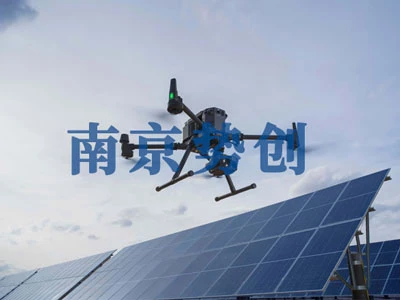
| Power Plant Inspection | Drone + AI vision, infrared + EL fusion, defect positioning accuracy ±0.5m. | Low manual inspection efficiency, high risk of high-altitude work. | Intelligent inspection robots, cloud data analysis platform. |
Full-Chain Inspection: Widespread adoption of quality traceability systems from polysilicon → wafers → cells → modules → power plants.
Deep AI Application: Machine vision replaces manual, defect recognition accuracy exceeds 98%, inspection efficiency increased 10x.
Standardization Progress: Accelerated development of standards for emerging technologies like drone EL inspection and 0BB module testing.
Surge in N-type/BC cell inspection demand: High-precision PL/EL equipment becomes standard on production lines, market expected to grow 40%+ in 2026.
Expanding power plant aftermarket: Over 1000 GW of PV plants in China entering O&M phase, demand for AI + drone inspection equipment soars.
Large overseas market: Stricter quality certification in Europe and America, growing demand for export inspection equipment.
Technical differentiation advantage: Provide integrated “inspection + data analysis + O&M” solutions, avoiding price wars.
Technology Iteration:
Develop PL/EL inspection modules dedicated to XBC cells, adapting to ultra-thin wafers and 0BB processes.
Upgrade AI algorithms to automatically grade defects like micro-cracks, poor soldering, and dark chips.
Develop flexible module inspection equipment, positioning for the perovskite tandem cell inspection market.
Market Deployment:
Focus on commercial and industrial distributed PV inspection, aligning with zero-carbon factory retrofits.
Expand cooperation with overseas certification bodies, providing equipment compliant with IEC 61215/61730 standards.
Service Upgrade:
Launch a subscription model of “equipment + cloud platform + O&M services” to enhance customer stickiness.
Build a defect database to offer yield optimization consulting services.
Capacity Governance:
Phasing out outdated capacity through legal means, controlling polysilicon/wafer/cell/module capacity within reasonable ranges.
Establish capacity utilization early-warning mechanism; companies below 70% subject to key supervision.
Value Enhancement Paths:
Build technological moats with high-quality IP to curb low-level redundant construction.
Dual constraints on energy consumption and efficiency across the whole chain, promoting green manufacturing certification.
Export strategy shift: from “low-price volume” to “technology + brand + service” premium model.
Policy Package:
Break market segmentation, promote unified national market.
Optimize export tax rebate policy, guiding industry towards high-value-added segments.
Strengthen quality supervision, establish full lifecycle traceability system for modules.
The 2025-2026 Roadmap clearly outlines the transformation trajectory of the PV industry: short-term scale adjustments are for long-term high-quality development; technological innovation and quality control will become core competitiveness.
R&D: Upgrade N-type/BC cell dedicated inspection equipment within 6 months, adapting to 0BB processes and ultra-thin wafers.
Market Expansion: Focus on commercial & industrial distributed PV and existing plant O&M markets; add 10-15 service outlets in prefecture-level cities by 2026.
Ecosystem Collaboration: Establish joint labs with module manufacturers, participate in setting inspection standards to enhance industry influence.
Service Enhancement: Develop equipment health management systems, provide predictive maintenance services to extend equipment life.
contact
Be the first to know about our new product launches, latest blog posts and more. Nanjing Vision Potential Intelligent Technology Co.,Ltd.Established based on the Nanjing Xiangning Artificial Intelligence Research Institute, we have brought together a number of outstanding industry... Any question or request?
Click below, we’ll be happy to assist. contact